I helped build a platform that changed caregivers' lives. Then I watched it disappear.
Not because it didn't work. It worked beautifully.
Not because people didn't need it. They needed it desperately.
It disappeared because we ran out of time to find the people who would have funded it.
Steadii was born out of a healthcare innovation initiative that noticed something everyone else missed: when someone is diagnosed with dementia, cancer, stroke, or another major illness, every medical professional in the room focuses on the patient.
Nobody focuses on the caregiver.
The spouse who quietly dismantles their own life to rebuild it around their loved one. The daughter who moves back home. The son who hasn't slept through the night in months. They're expected to figure it out on their own, and most of them are drowning.
As the founding engineer and product architect, I helped interview caregivers, design the platform, and build it from the ground up. We experimented with different approaches until we found what actually made a difference: connecting caregivers with trained coaches who had caregiving experience themselves.
Each caregiver discovered their caregiving style and was matched with a coach (what we called advocates). Someone who understood what they were going through, not from a textbook, but from life. Biweekly virtual sessions. Personalized guidance. Practices for the days between calls when everything feels impossible.
And it worked.
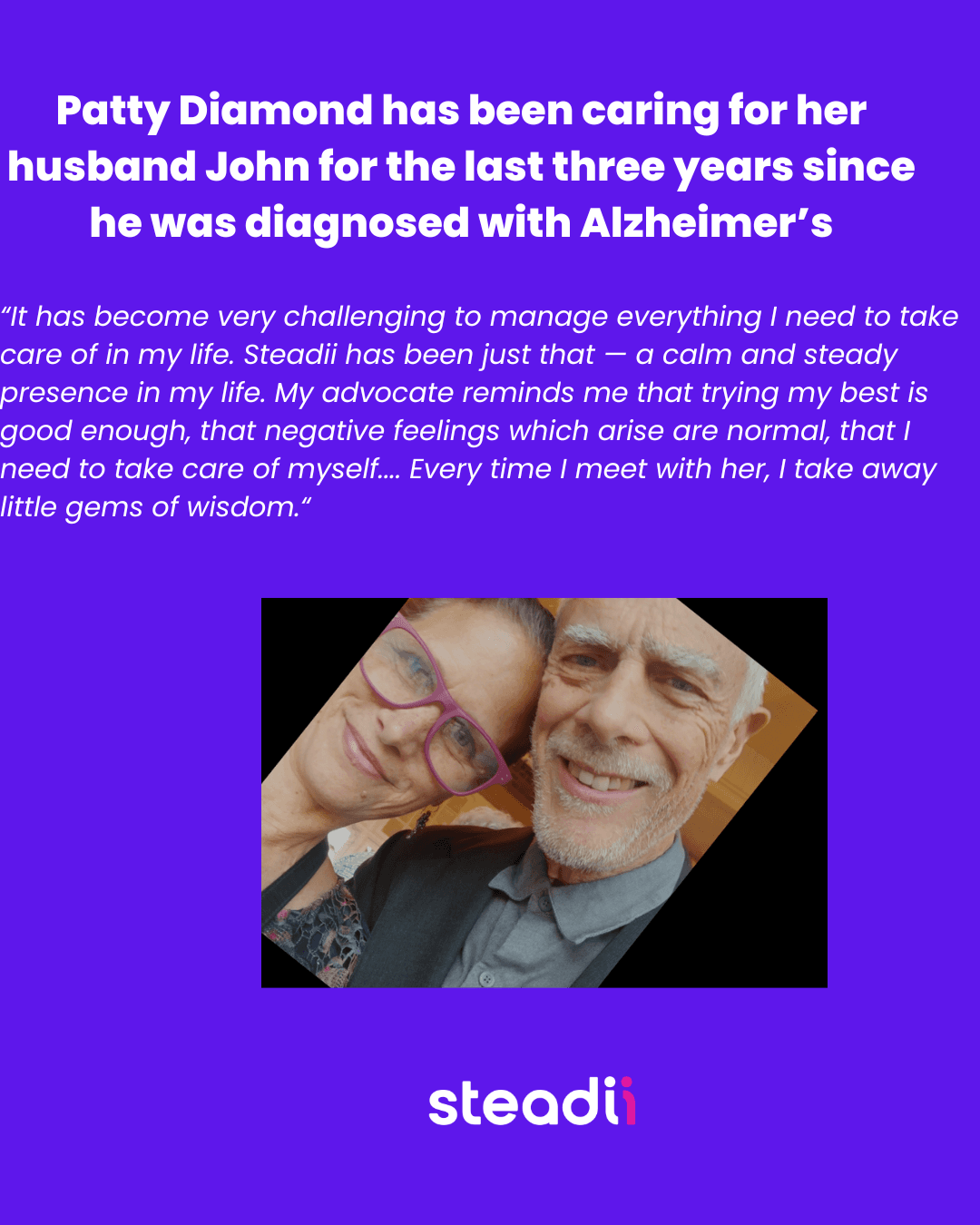
Leea is a single mom and an RN, and she's caregiving for both her aging parents.
"Resources for the aging and their caregivers are so limited, and the system is difficult to navigate. I am intimately familiar with what is available, yet finding help for my parents and for me as a caregiver has still been one of the greatest challenges of my life. I witness patients and their loved ones facing these same struggles in their own journeys, but often without someone guiding and supporting them. Steadii is a bright light in the dark void of the caregiving journey and provides much-needed services that I have found nowhere else."
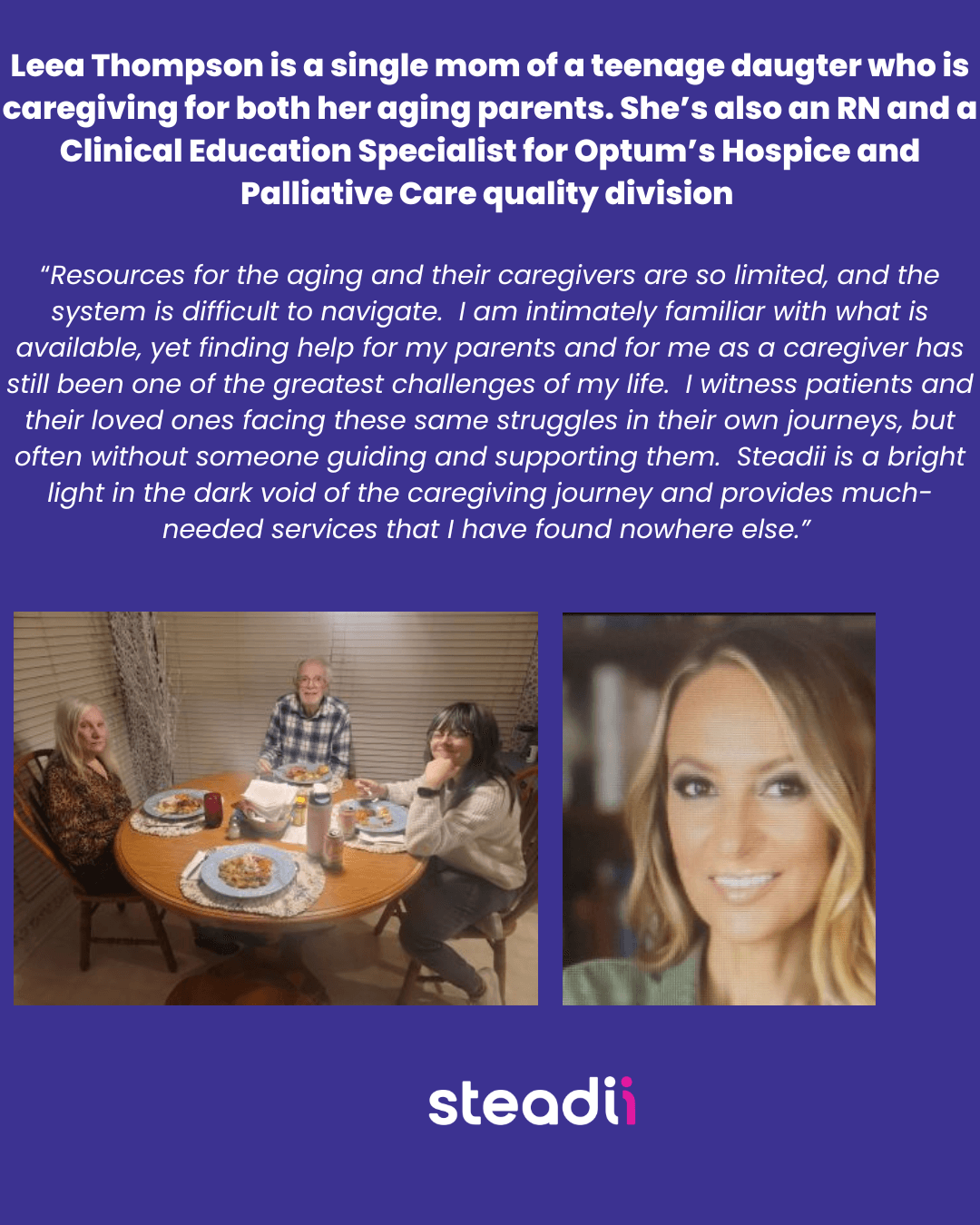
Beth has cared for her husband Mitch through almost 10 years of Frontotemporal Degeneration.
"Steadii, and my advocate Lorien, have helped me move through guilt, manage burnout, and stay grounded. Through real guidance, real resources, and true compassion, Steadii helps me stay connected, to support, to myself, and to Mitch."
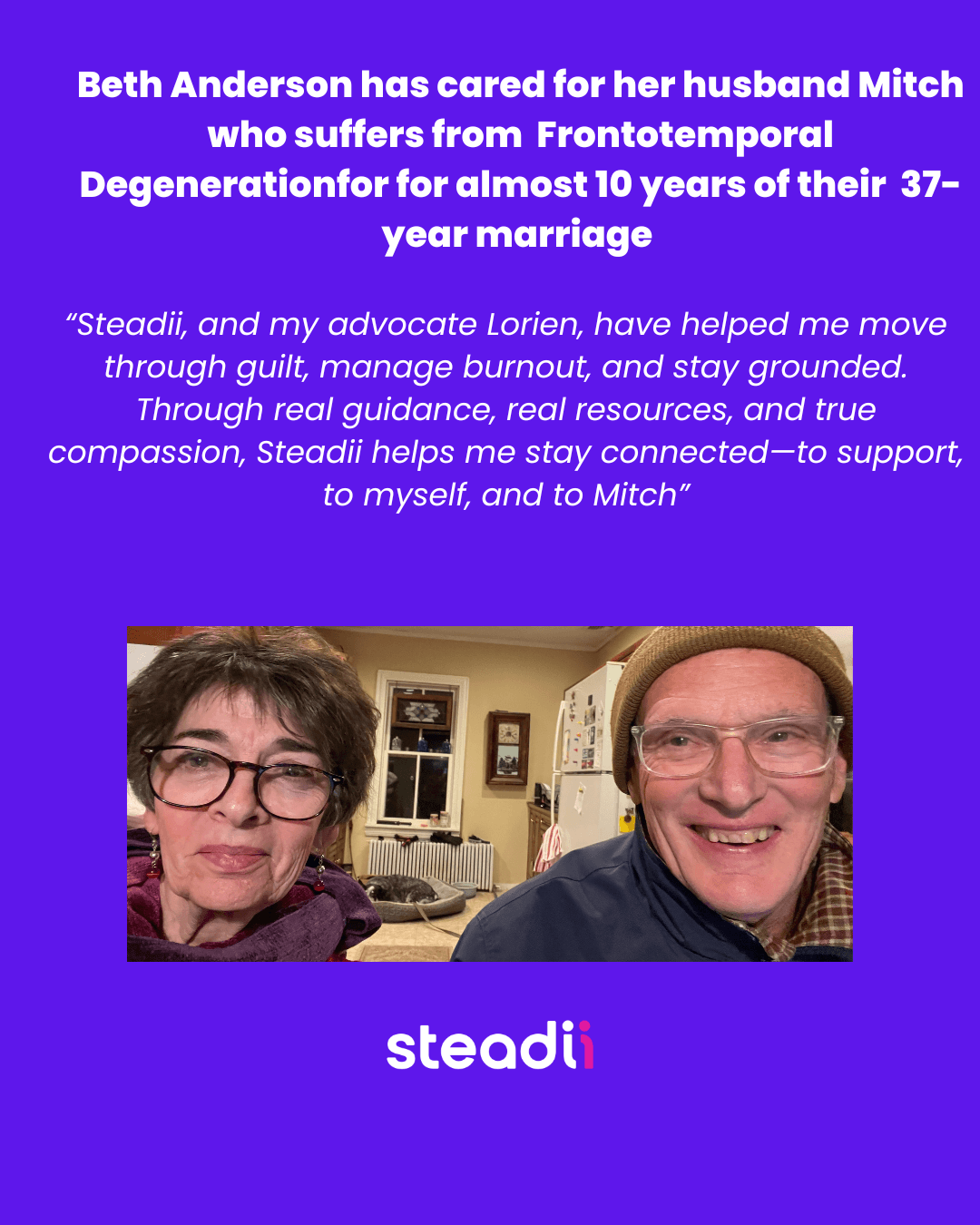
Patty has been caring for her husband John since his Alzheimer's diagnosis three years ago.
"It has become very challenging to manage everything I need to take care of in my life. Steadii has been just that, a calm and steady presence in my life. My advocate reminds me that trying my best is good enough, that negative feelings which arise are normal, that I need to take care of myself... Every time I meet with her, I take away little gems of wisdom."
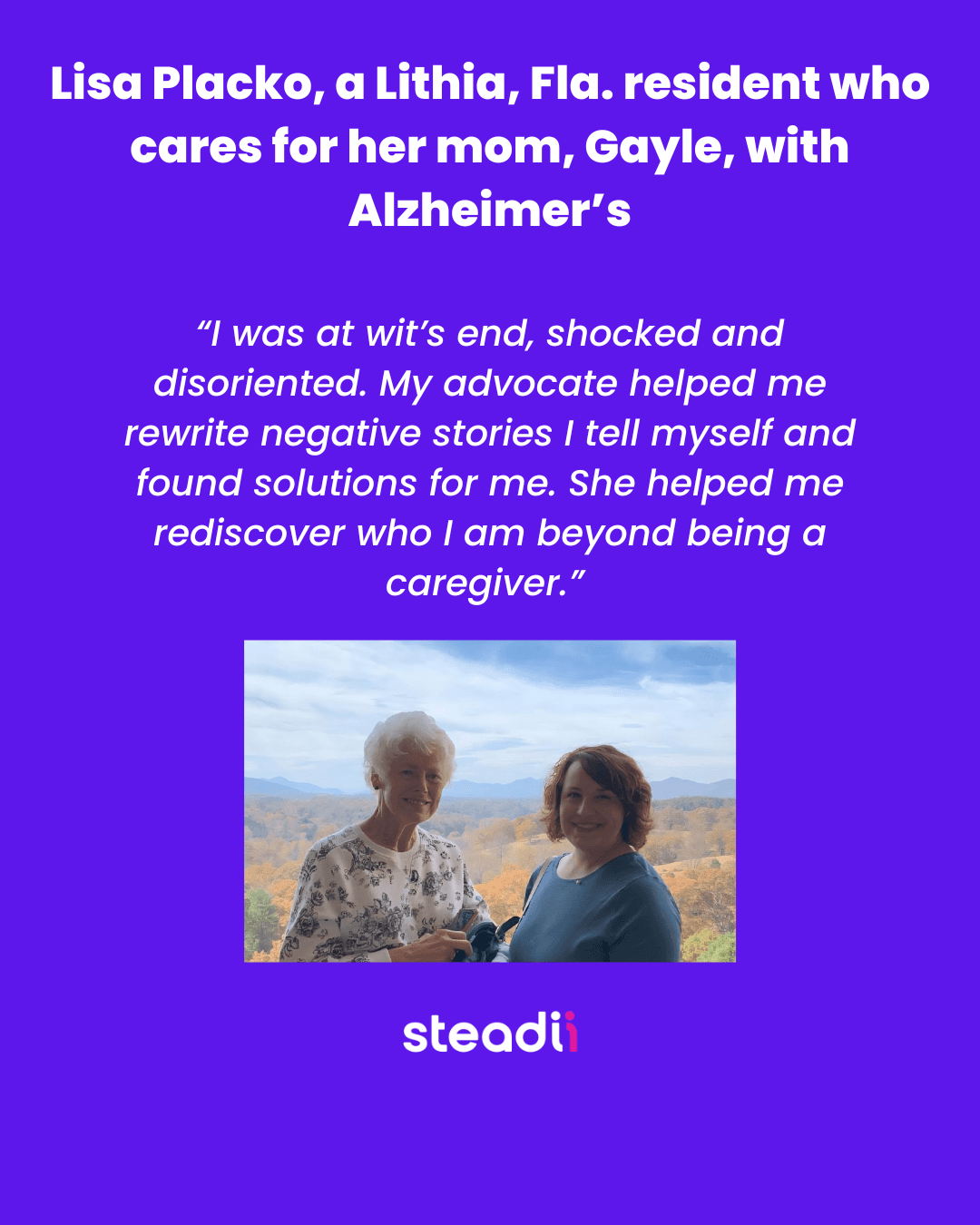
Lisa cares for her mom, Gayle, who has Alzheimer's.
"I was at wit's end, shocked and disoriented. My advocate helped me rewrite negative stories I tell myself and found solutions for me. She helped me rediscover who I am beyond being a caregiver."
Steadii provided a lifeline to these caregivers and more. And that lifeline was abruptly ended.
Here's what made Steadii's business model so painful.
Caregivers found our service valuable. They also found it unaffordable. The math is brutal: most caregivers have already given up their income, partially or entirely, to provide care. At the same time their loved one's medical bills have also skyrocketed.
With both of these financial pressures, there's almost nothing left for mental health support. No matter how much they need it.
We tried pivoting to an employee benefit model. But the caregivers who had full-time jobs didn't need us as much as those who had given up work entirely to care for someone.
The people who needed us the most were the ones who could afford us the least.
That meant we needed grants, donations, and institutional funders. The kind of money that sustains mission-driven work when the market can't.
But we hadn't laid the groundwork.
By the time we knew our primary funding source wouldn't continue, we had two months of runway left. Two months to find grants, donors, institutional partners, with no relationships in place.
It wasn't enough.
The internal team tried to make it work. The advocate network, the coaches who had poured themselves into these caregivers, tried to make it work. Everyone could see what was at stake. It wasn't a product shutting down. It was Beth losing Lorien. It was Patty losing her steady presence. It was Lisa, alone again, without someone to help her rewrite the stories in her head.
We lost. Not because the mission wasn't worth funding. We lost because we started too late.
I think about those two months all the time.
If Steadii had started building relationships with funders, grant-makers, and institutional donors before we needed them, if we'd had warm paths into those conversations instead of cold outreach with two months left, we'd still be supporting caregivers today.
I believe that with everything I have. The product worked. The need was real. The only thing missing was the funding pipeline.
I'm building the tools that solve exactly that problem.
Wilson finds the warm path: the mutual connection, the shared board member, the former colleague who already believes in what you do. So the ask isn't cold. So you're not starting from zero with two months left.
Because the next Steadii shouldn't die from a fundraising problem. The next Beth shouldn't lose her advocate. The next Lisa shouldn't have to go back to figuring it out alone.
Good ideas don't fail because they aren't good enough. They fail because the people behind them don't have a path to the people who would say yes, if only someone made the introduction.
I'm building the tool that finds them.